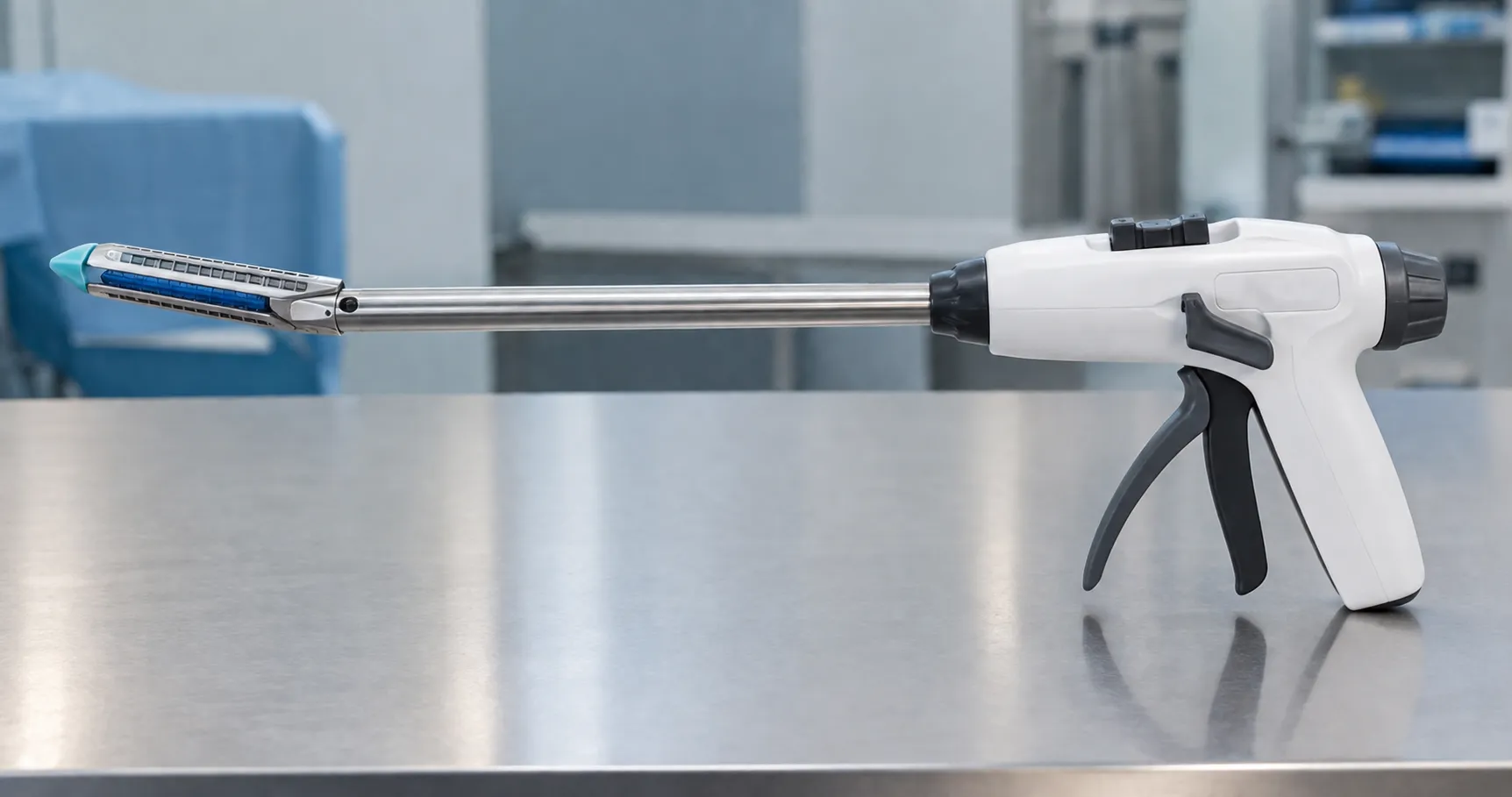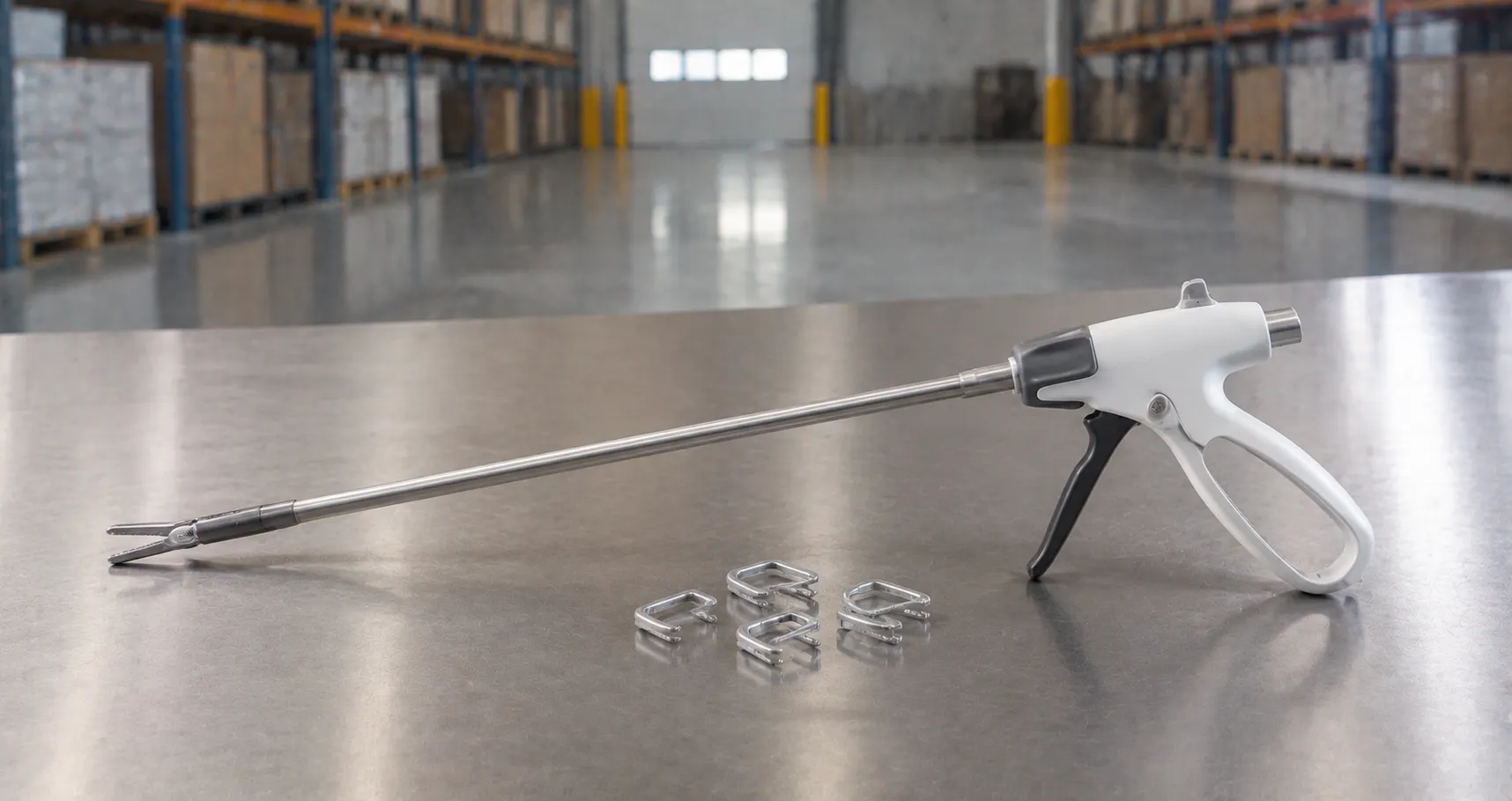
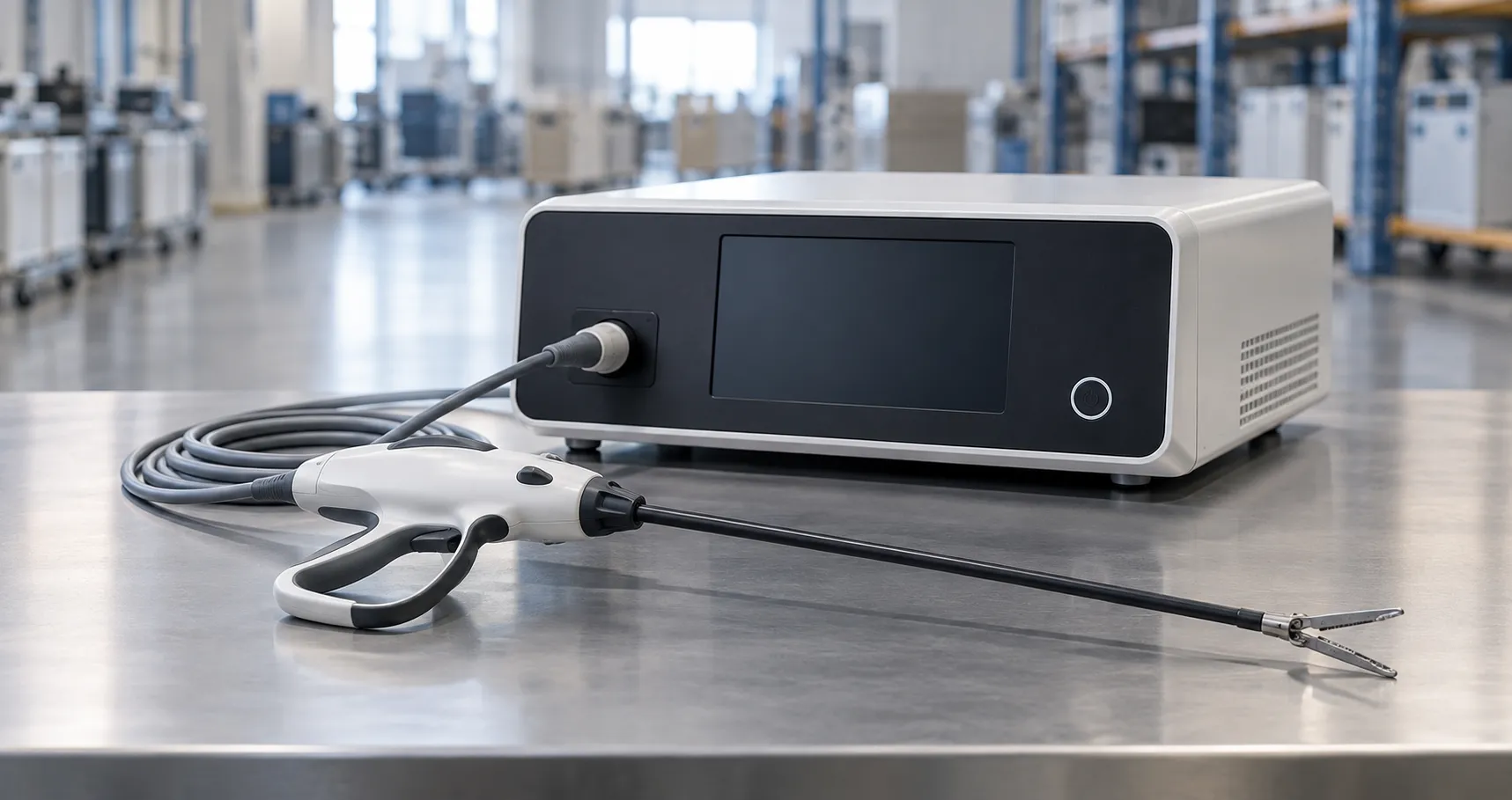
A vessel sealing system uses controlled bipolar energy and jaw pressure to fuse the walls of a blood vessel into a permanent seal, then usually divides the sealed tissue with an in-built blade. It replaces clips and ties for many vessels up to a stated diameter, most commonly quoted around seven millimetres, and combines sealing and cutting in one instrument. For a theatre buyer, the decision spans the generator, the reusable or single-use handpieces, and how feedback control keeps seals reliable.
The value of vessel sealing is a consistent seal produced quickly with limited thermal spread to nearby tissue. The generator measures the tissue and adjusts the energy; the surgeon positions the jaws and decides which vessels are suitable for a fused seal rather than a clip or suture.
How a vessel seal is formed
Sealing depends on two things happening together: compression and energy. The instrument jaws clamp the vessel to bring its walls into apposition, then the generator passes bipolar radiofrequency current between the two jaws through the tissue. The current heats the collagen and elastin in the vessel wall so they denature and reform into a fused, translucent band that occludes the lumen. A feedback loop is central: the generator continuously senses tissue impedance and modulates power, stopping automatically when the seal is complete. Only then does the surgeon advance the blade to divide the tissue through the middle of the seal, leaving a sealed edge on each side. The strength of the finished seal depends on getting the right amount of tissue in the jaws, keeping the jaw surfaces clean of char, and allowing the cycle to run to completion rather than cutting early. Most generators give an audible tone or visual signal when the seal is judged complete, and some lock out the cutting action until the seal cycle has finished, which is a useful safeguard against dividing an incomplete seal.
Vessel sealing compared with other haemostasis methods
Buyers should place sealing among the alternatives. Ligature clips give a fast mechanical occlusion but leave an implant and can be dislodged; sutures are versatile but slow; conventional monopolar and standard bipolar coagulate but do not reliably seal larger vessels; ultrasonic devices cut and coagulate by mechanical vibration with less lateral heat but a different seal profile. Advanced bipolar vessel sealing is distinguished by feedback-controlled, permanent seals on vessels up to the rated diameter with a contained thermal margin. Some platforms combine bipolar sealing and ultrasonic energy in one handpiece. None removes the need for surgical judgement about which vessels to seal versus clip or tie.
Generators and instruments
A vessel sealing platform is a generator plus handpieces. Modern generators often host several energy modalities, recognising the connected instrument and loading the correct algorithm automatically. Handpieces come as open instruments with various jaw lengths and as laparoscopic shafts of five and ten millimetres, with sealing jaws, integral blades and rotation. Some are fully single-use, some have a reusable handle with disposable jaw inserts, and some are reusable with a set number of validated activations. The generator, footswitch or hand controls, and the instrument connector are brand-specific, so the system is bought as a matched family rather than mixed between manufacturers. Curved and straight jaw profiles suit different dissection styles, and a fine-tipped instrument helps with precise dissection close to structures, while a broader jaw handles thicker pedicles. When assessing handpieces, put them in surgeons' hands during a trial, because the balance, the trigger action and how cleanly the blade advances all affect how the instrument performs in a real dissection rather than on a specification sheet.
Key specifications a buyer must check
Confirm the stated maximum vessel diameter the seal is validated for and the seal cycle time, because both affect operating time. Check the jaw sizes and shaft lengths and diameters available for your open and laparoscopic work, whether the instrument rotates, and the ergonomics of activation. Review the generator's supported modalities, whether it auto-recognises instruments, and its interface and stored settings. Look at thermal-spread performance if lateral heat near delicate structures is a concern, blade mechanism reliability, and integration with theatre systems and smoke management. Confirm the footprint and power requirements for the generator in your theatres.
Safety, thermal spread and reliability
Because sealing relies on heat, controlling where that heat goes matters. Bipolar energy keeps current between the two jaws rather than through the patient, which avoids the neutral-electrode concerns of monopolar work, but adjacent tissue can still be affected by conducted heat, so buyers should weigh the quoted thermal spread where nerves or bowel lie close. Seal integrity depends on clean jaws, correct tissue in the jaws, and letting the feedback cycle finish before cutting. Confirm the generator meets IEC 60601-1 and the electrosurgery standard IEC 60601-2-2, that seal-complete and fault indications are clear, and that the surgical plume is evacuated. Correct technique and training, not the device alone, deliver dependable seals.
Use across surgical settings
Vessel sealing is used across general, colorectal, gynaecological, urological, thoracic and bariatric surgery, in both open and minimally invasive approaches. High-volume laparoscopic services value the combined seal-and-cut action that reduces instrument changes, while open theatres use longer-jawed instruments for pedicles and vascular bundles. A trust running several specialties may standardise on one generator family with a library of handpieces to simplify training and stock. Because the technology is energy-based, biomedical engineering support and planned electrical-safety testing are part of ownership from day one.
Standards, regulation and servicing
A vessel sealing generator and its instruments are medical devices requiring valid UKCA or CE marking and a declaration of conformity, with the supplier registered to place them on the Great Britain market; verify this through the MHRA and consult wider device guidance on GOV.UK. Generators need scheduled electrical-safety testing and output verification by biomedical engineering or the manufacturer, with records kept for governance. Instruments are single-use or carry a stated activation limit and validated reprocessing method in the instructions for use; exceeding those limits risks weak seals, so stock control must enforce them.
Consumables and total cost of ownership
As with most energy platforms, the recurring instrument spend outweighs the generator price. Single-use handpieces are the main cost driver, so model your real cost per case at expected volumes, and compare fully disposable instruments against reusable-handle-with-disposable-insert designs where they suit your workflow. Add smoke-evacuation filters and any footswitch or cable spares. Ask suppliers about generator warranty and first-service inclusion, instrument pricing tiers, loan-generator availability during servicing, and the upgrade path as the platform develops, since brand lock-in makes later switching costly. The MediGear buyers team can compare sealing platforms and consumable costs, or contact us for availability.
Procurement checklist
-
The validated maximum vessel diameter and typical seal cycle time.
-
Match jaw lengths and shaft sizes to your open and laparoscopic caseload.
-
Check whether the generator auto-recognises instruments and hosts multiple modalities.
-
Weigh thermal spread where seals sit near nerves or bowel.
-
Verify IEC 60601-2-2 compliance, UKCA or CE marking and MHRA registration.
-
Confirm instrument activation limits and reprocessing rules are enforced in stock control.
-
Model cost per case across handpieces, inserts and filters.
-
Confirm servicing, output verification and loan-generator cover during downtime.
Conclusion
Vessel sealing systems deliver fast, feedback-controlled, permanent seals on vessels up to a rated diameter and combine sealing with division in one instrument, which streamlines many open and laparoscopic operations. A sound purchase depends on matching handpieces to your specialties, respecting the thermal-spread and activation limits, and budgeting for the single-use instruments that dominate running cost. Comparing verified sealing platforms through MediGear helps your theatre secure haemostasis that is reliable, safe, and sensibly costed.
Disclaimer
This article is for informational purposes only. It is published by MediGear (medigear.uk) for general information and procurement guidance, and is not clinical, diagnostic, treatment, technical, engineering, legal or regulatory advice, nor a product endorsement, guarantee or substitute for professional assessment. MediGear does not provide medical consultations. Buyers should consult their clinical, biomedical, estates and regulatory contacts, and the manufacturer's documentation, and independently verify all specifications, certifications, compatibility and suitability before purchase. Specifications, certifications and availability are correct at the time of publication and may change without notice. MediGear is a medical-equipment distributor and does not sell medicines or pharmaceutical products.