Surgical navigation is a computer-assisted system that shows the real-time position of tracked instruments relative to a patient's imaging, letting a surgeon see on screen where a tool sits inside anatomy that is hidden from direct view. A tracking device follows markers on the instrument and the patient, and software overlays that position onto a CT, MRI, or intraoperative image. For a buyer, the decision spans the tracking technology, the registration workflow, the accuracy claimed, and how the system integrates with imaging and existing instruments.
The benefit is spatial confidence: navigation helps place implants, screws, and probes accurately and approach targets while avoiding critical structures. The system reports position; the surgeon interprets it and remains responsible for every clinical decision and movement.
How surgical navigation works
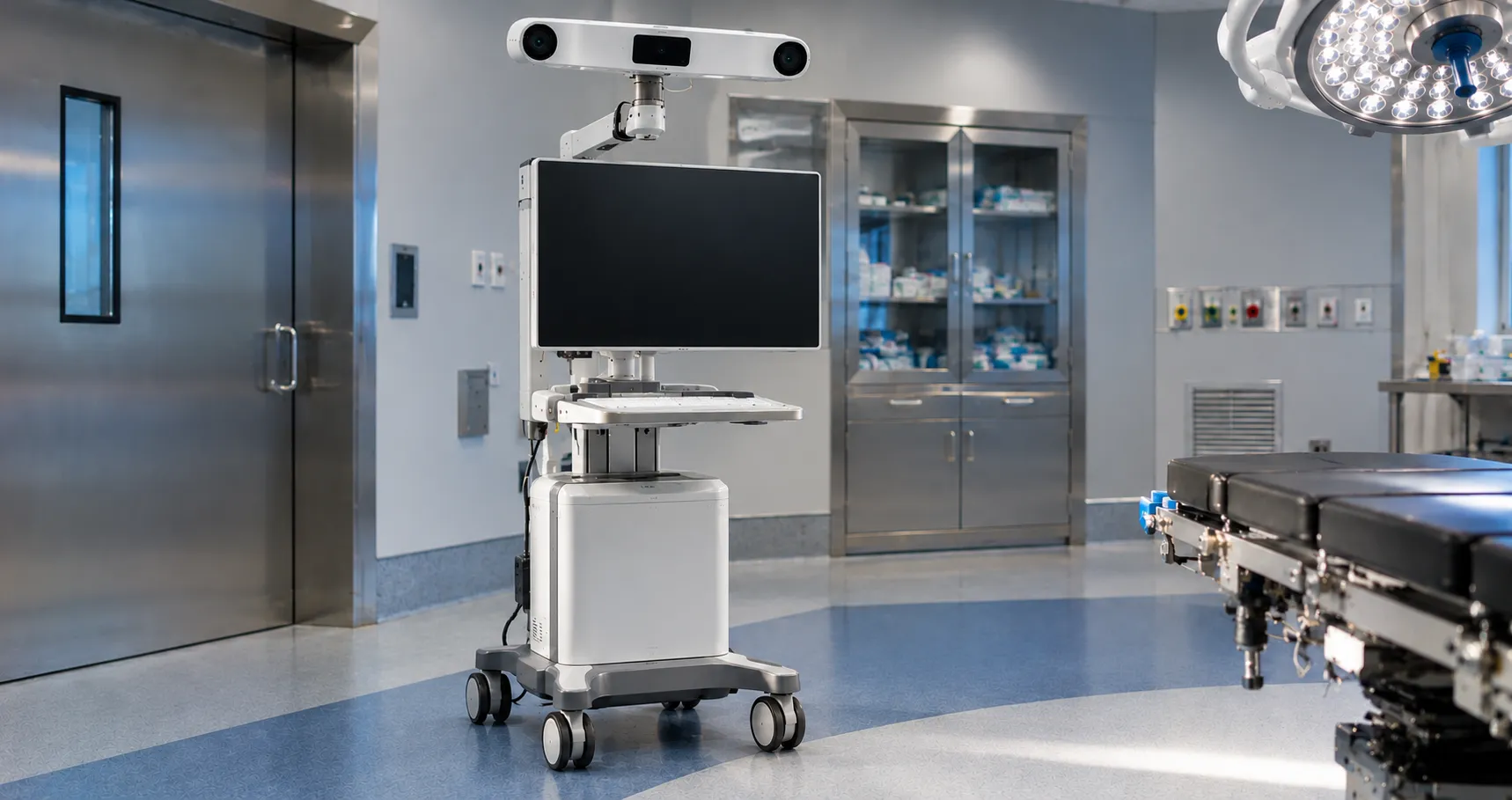
Navigation links three things: the patient's imaging, the patient's physical anatomy, and the tracked instruments. First the imaging is loaded, and a planning step may mark targets. Then registration matches the image coordinate system to the real patient, either by touching known anatomical landmarks with a pointer, by surface matching, or automatically from an intra-operative scan. Once registered, the tracking system continuously reports the position of markers attached to the instruments and to a fixed reference frame on the patient, and the software draws the instrument tip on the images in real time. A reference marker on the patient lets the system compensate if the patient or table moves. This dynamic reference is important because without it, any shift of the patient relative to the camera would silently invalidate the registration; with it, the software measures instrument position relative to the patient rather than the room. The tip position shown on screen is calculated from the geometry of the marker array and a calibrated tool, so if an instrument is bent or a marker is knocked, the displayed tip can drift from the real one, which is why tools are verified against a known point before use.
Optical and electromagnetic tracking compared.
Two tracking technologies dominate. Optical tracking uses a stereo infrared camera that sees reflective spheres or active LEDs on rigid marker arrays; it is highly accurate but needs an unobstructed line of sight between the camera and every marker, so instruments and staff must not block the view. Electromagnetic tracking uses a field generator and tiny sensor coils that need no line of sight, so a sensor can sit at the tip of a flexible instrument inside the body, but the field can be distorted by nearby ferromagnetic metal. Optical systems suit rigid instruments in open orthopaedic and cranial work; electromagnetic systems suit flexible or small instruments and ENT approaches. Some platforms offer both.
Registration and accuracy
Accuracy is the heart of any navigation purchase, and it is a chain, not a single number. Manufacturers quote a system or positional accuracy, often in the sub-millimetre to low-millimetre range, but the accuracy the surgeon actually experiences depends on the imaging resolution, the quality of registration, and whether the reference frame has shifted. A poor landmark registration or a knocked reference array degrades everything downstream. Good systems display a registration-error estimate and let the team re-verify against a known point during the case. Buyers should look beyond the headline accuracy figure to the registration workflow, how it detects and flags error, and how easily accuracy can be re-checked mid-procedure.
Key specifications a buyer must check
Confirm the tracking technology and whether both optical and electromagnetic are supported. Check the stated accuracy and, importantly, how registration is performed and verified. Review compatibility with your imaging sources, including intra-operative CT or cone-beam and pre-operative MRI, and whether the system integrates with a specific implant or robotic platform. Confirm which instruments can be tracked, whether your existing instruments can be calibrated in, and the marker and reference-array options. Look at the software workflow, setup time, footprint of the camera or field generator in the theatre, and data export for records. Ask about upgrade paths as software matures.
Safety, verification and limitations
Navigation is a decision-support tool, and its safe use turns on the surgeon treating the on-screen position as guidance to be verified, not absolute truth. The largest risks come from registration error and a displaced reference frame: if the patient moves relative to a loosened marker, the display can be confidently wrong. Good practice re-checks accuracy against a known anatomical point during the case, and teams keep tactile and anatomical checks alongside the screen. Line-of-sight loss halts optical tracking, and metal can disturb electromagnetic fields, so theatre setup matters. Confirm the system meets IEC 60601-1 and relevant particular standards, and that it clearly indicates when tracking or registration is unreliable.
Use across specialties and settings.s
Navigation is well established in spinal and cranial neurosurgery, orthopaedic joint replacement, ENT and maxillofacial surgery, and it increasingly pairs with robotic and intra-operative imaging platforms. A neurosurgical centre may prioritise cranial and spinal workflows with intra-operative imaging integration, while an ENT service may value electromagnetic tracking for sinus work. Because navigation ties into imaging and often into implants or robotics, the purchase is rarely standalone; it involves radiology, biomedical engineering and IT for data handling. Where navigation supports a specific procedure, relevant clinical guidance may be published by bodies such as NICE, and device oversight sits with the MHRA.
Standards, regulation and servicing
A surgical navigation system is a software-driven medical device that must hold valid UKCA or CE marking with a declaration of conformity, and the supplier must be registered to place it on the Great Britain market; broader device guidance is on GOV.UK. Because much of the function is software, ask how updates are validated and deployed, how patient imaging is stored and protected, and how the system meets information-governance expectations. The camera, field generator, and reference arrays need periodic accuracy verification and electrical-safety testing by biomedical engineering or the manufacturer, and any reusable tracked instruments and marker frames follow the validated reprocessing method in the instructions for use.
Consumables and total cost of ownership
Navigation carries a substantial capital cost, and the running cost is easy to underestimate. Single-use marker spheres, disposable reference frames, sterile drapes for the camera and any single-use tracked instruments recur with every case, so model them at expected volumes. Add software-licence and support contracts, accuracy-verification servicing and training as the team turns over. Because navigation is often tied to a manufacturer's imaging, implants or robot, weigh the long-term lock-in and the upgrade roadmap before committing. Ask about warranty, response times, loan cover, and integration costs with your existing theatres. The MediGear buyers team can help compare navigation platforms, or contact us to discuss requirements.
Procurement checklist
-
Confirm the tracking technology, optical or electromagnetic or both, suits your procedures.
-
Look beyond headline accuracy to the registration workflow and how error is flagged.
-
Check compatibility with your imaging sources and any implant or robotic platform.
-
Confirm which instruments can be tracked and whether existing ones can be calibrated in.
-
Confirm UKCA or CE marking, IEC 60601-1 electrical safety, and Great Britain registration.
-
Clarify software update validation, imaging storage and information governance.
-
Plan accuracy verification, electrical-safety testing and staff training.
-
Model recurring marker, drape and licence costs plus long-term platform lock-in.
Conclusion
Surgical navigation gives the operating team spatial confidence by showing tracked instruments against a patient's imaging in real time, which supports accurate implant placement and safer approaches to hidden targets. A sound purchase depends on choosing the right tracking technology, scrutinising the registration workflow rather than a single accuracy figure, and planning for software, verification and recurring consumables. Comparing verified navigation platforms through MediGear helps your service invest in guidance that is accurate, well integrated and properly supported.
Disclaimer
This article is for informational purposes only. It is published by MediGear (medigear.uk) for general information and procurement guidance, and is not clinical, diagnostic, treatment, technical, engineering, legal or regulatory advice, nor a product endorsement, guarantee or substitute for professional assessment. MediGear does not provide medical consultations. Buyers should consult their clinical, biomedical, estates and regulatory contacts, and the manufacturer's documentation, and independently verify all specifications, certifications, compatibility and suitability before purchase. Specifications, certifications and availability are correct at the time of publication and may change without notice. MediGear is a medical-equipment distributor and does not sell medicines or pharmaceutical products.