
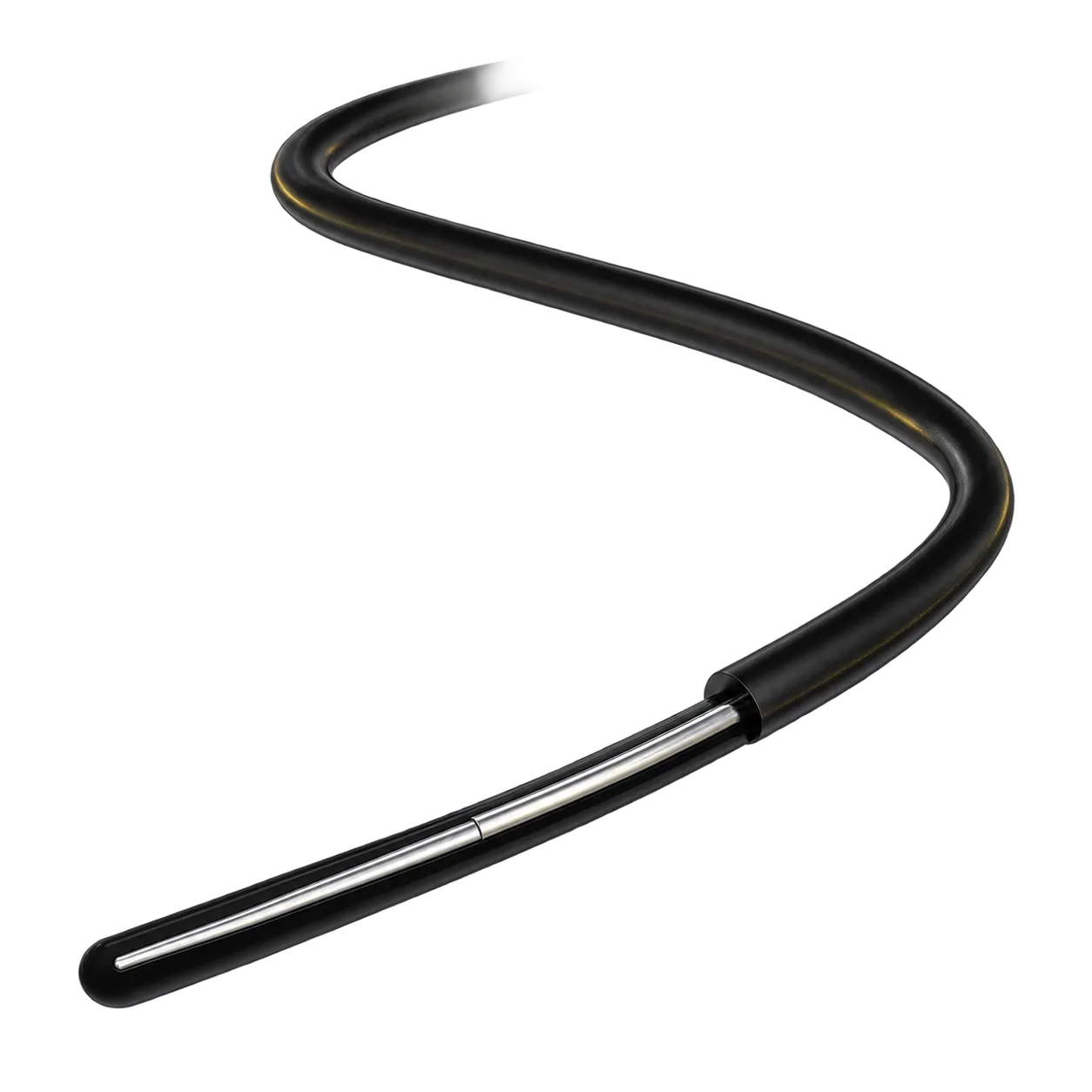
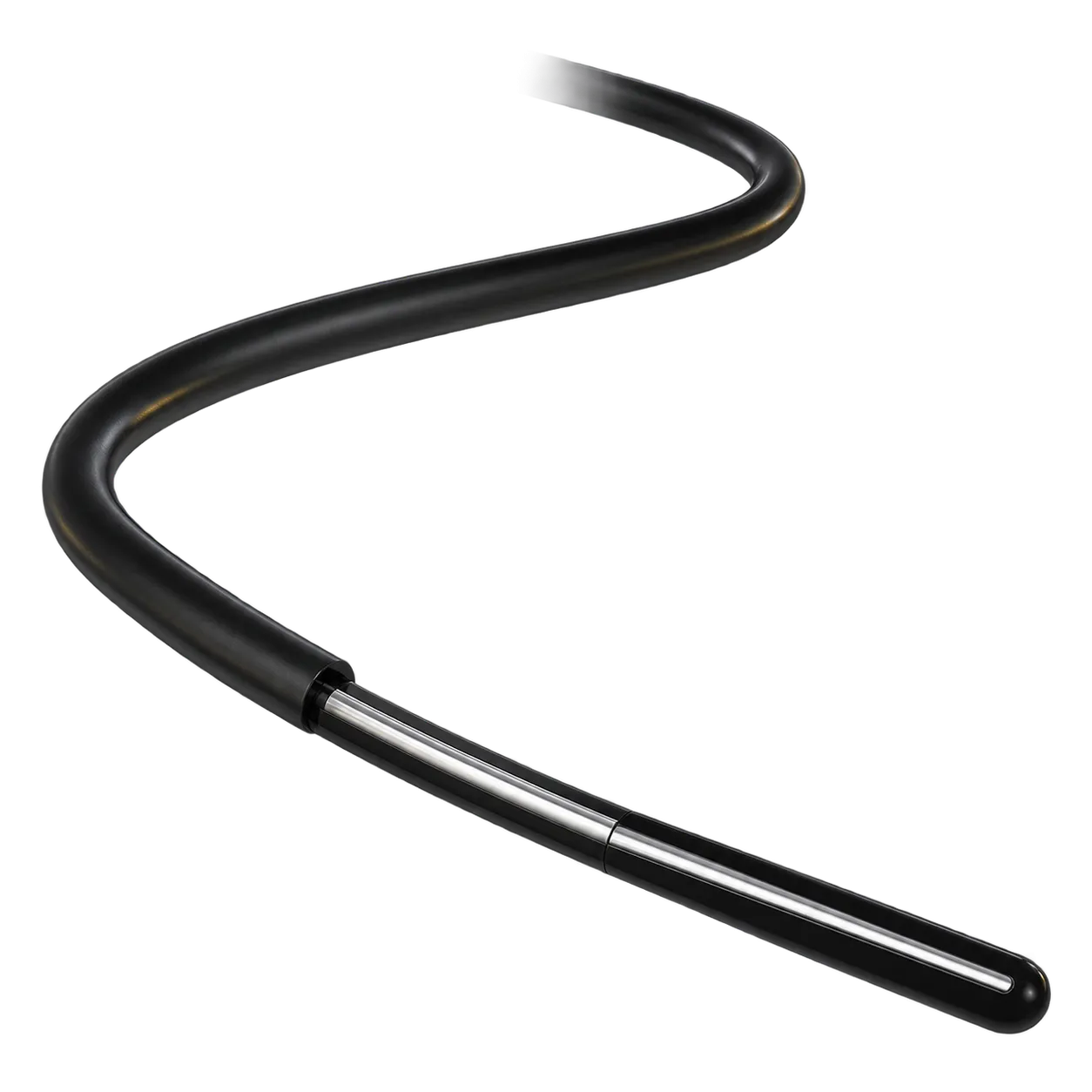
Not every vessel is straight and not every target sits on the main path. Diagnostic angiography and peripheral intervention regularly require a wire to be steered into a named branch, or advanced through a segment that is narrowed, calcified, or tortuous. A coated stainless steel wire manages routine advancement well but has limits in both situations. This range addresses those limits.
The hydrophilic coating is the first part of the answer. Once wet, it becomes markedly more slippery than PTFE, so the wire crosses tight and irregular segments with less force. Less force means less risk of the tip digging into the vessel wall. The nitinol core is the second part. Superelastic behaviour means the wire follows a tortuous path and recovers its shape rather than taking a permanent kink, and a kinked wire in a vessel is a genuine problem because it will not track catheters cleanly.
The angled tip is the third. Selecting a branch means pointing the tip and rotating the wire from outside the patient, which only works if rotation transmits reliably along the shaft. That is what the 1:1 torque claim refers to. Fluoroscopic visibility ties it together, since steering is done by watching the tip on screen, and the tungsten-loaded jacket provides that. Against those advantages sits a handling requirement.
Hydrophilic wires stay slippery only while wet and are harder to grip, so a torque device is used, and the wire is kept hydrated throughout. Medigear.uk supplies the instructions for use with every order.