
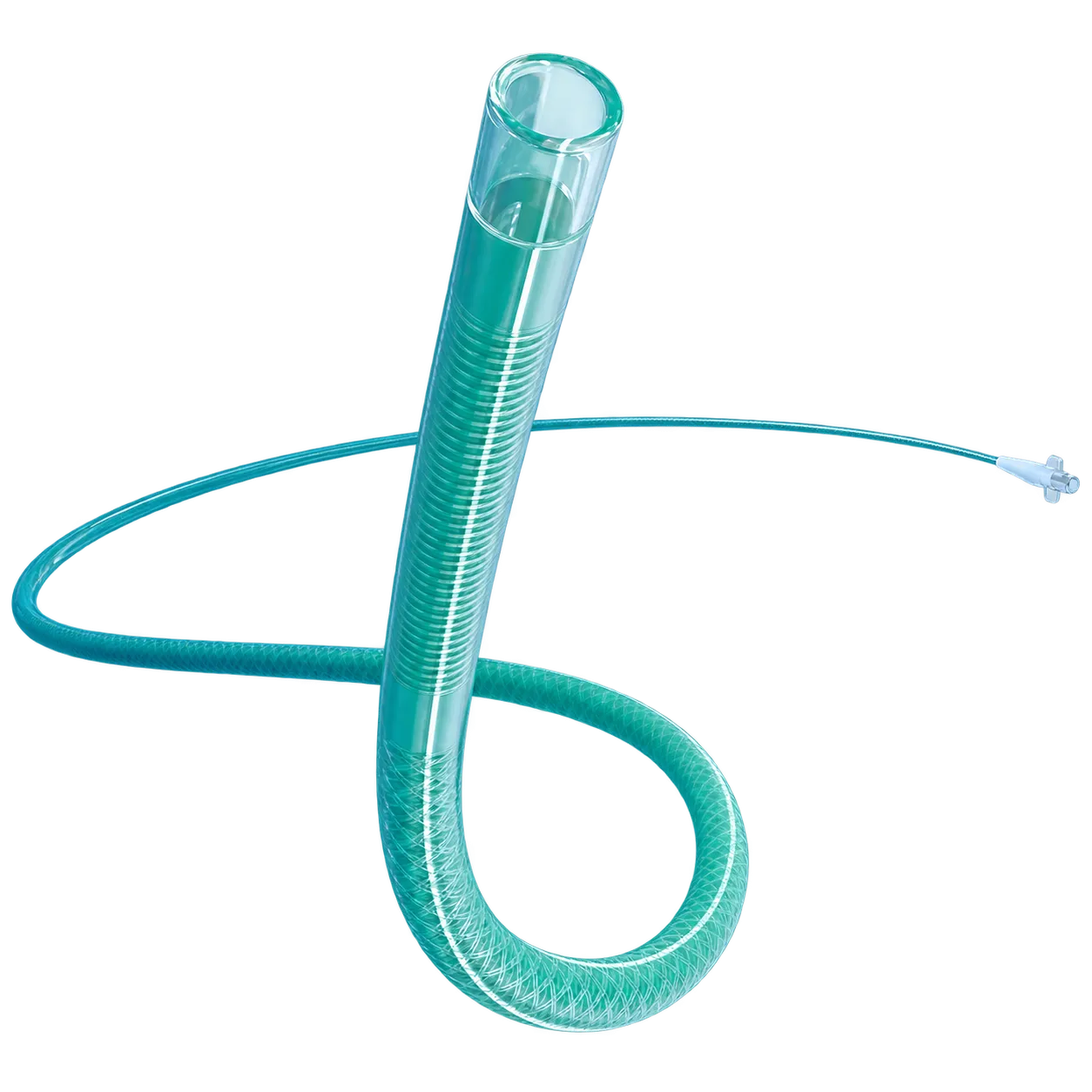
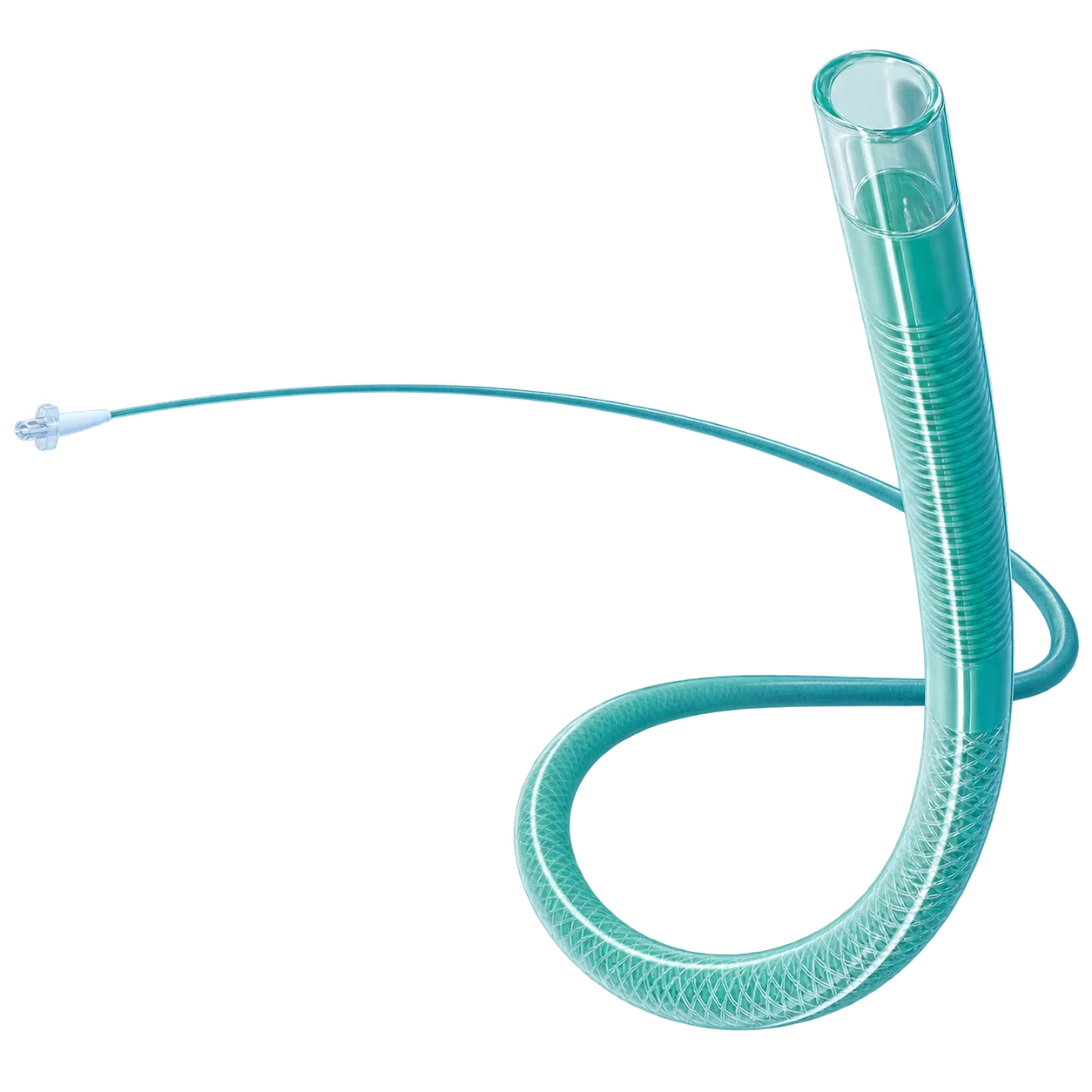
Treating disease in the cerebral circulation means reaching vessels a millimetre or two across, several turns beyond where a guide catheter can sit. A microcatheter makes that journey. It runs over a micro guidewire through the guide, into the intracranial vessels, and stops at whatever is being treated, whether an aneurysm to be filled with coils, a malformation to be embolised, or a clot to be reached.
Two demands pull against each other along that route. The tip has to be fine, because the target vessel is small and a blunt or bulky catheter will not enter it. The shaft has to be firm, because everything advancing the catheter is applied at the far end, more than a metre away, through anatomy that absorbs force at every bend. A catheter thin enough at the tip but thin throughout would concertina rather than advance.
Tapering resolves it, and the degree of taper reflects how far the catheter is meant to go. A sharply tapered design reaches deepest. A gently tapered one carries a wider lumen for larger devices at slightly less depth. Lumen size then governs what passes through, and it is chosen against the device rather than the vessel. Liquid embolic delivery adds its own requirement, since solvent-based agents attack ordinary polymers and demand a compatible catheter, primed first with solvent matching the catheter's own dead space.
That last figure has to come from the manufacturer, because it cannot be inferred from lumen and length. Medigear.uk supplies the instructions for use with every order.