
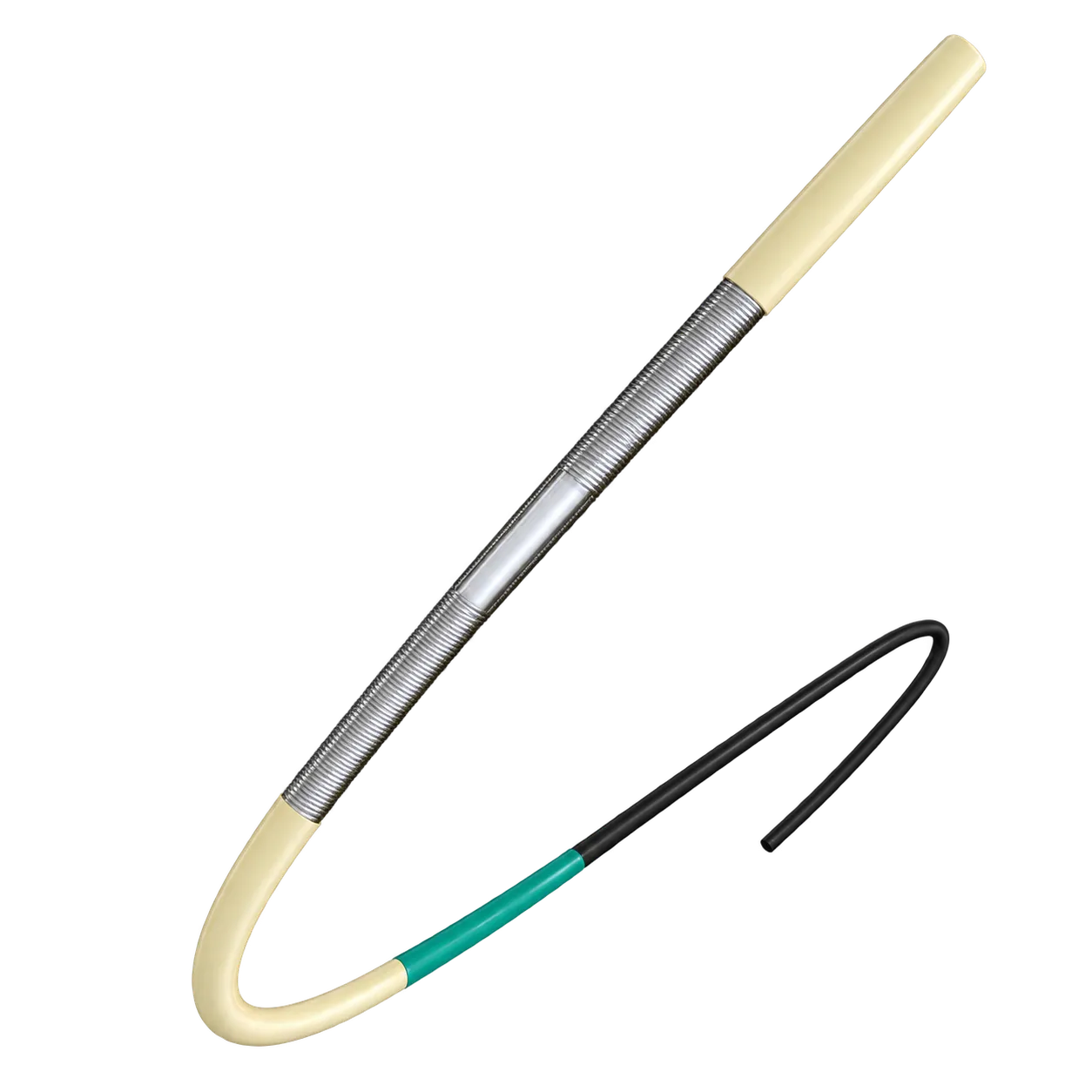
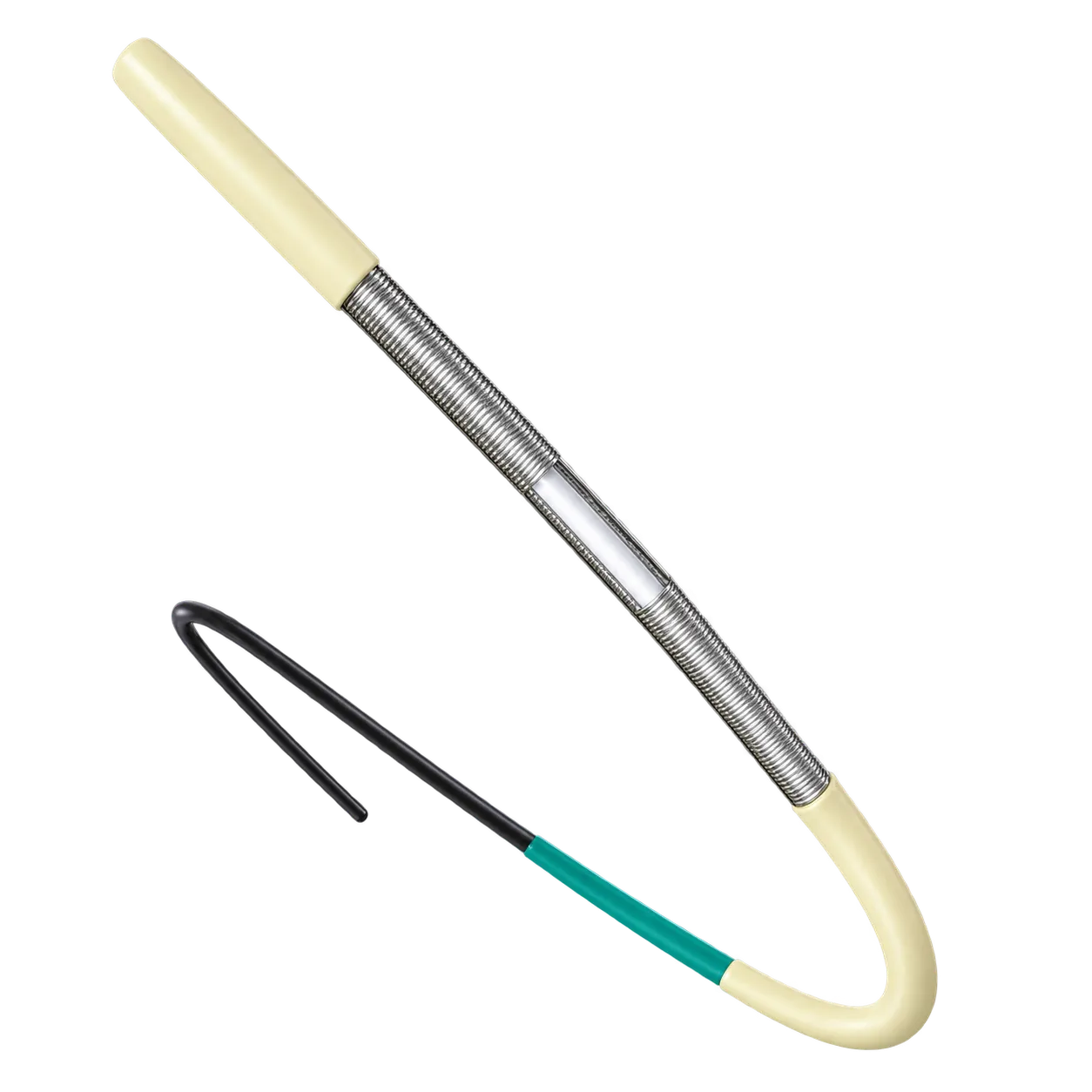
Embolisation deliberately blocks a blood vessel. It stops bleeding, starves a tumour of its supply, or closes an abnormal connection between an artery and a vein. Reaching the target is the first problem, because the vessels involved are small and often far from the access point, and a standard catheter cannot get there.
A microcatheter solves that by being small and flexible enough to run through a guide catheter and continue into vessels a millimetre or two across. Once in position, it becomes the delivery route for whatever embolic is being used. Coils, particles,s and liquid agents all pass down the same lumen. That is why the inner surface matters so much, and why PTFE is used for it. The lumen diameter decides which of those agents will actually fit.
Liquid embolics based on DMSO impose their own discipline. The solvent attacks common catheter polymers, so only formulated catheters may be used, and the manufacturer's warnings on this are explicit about the consequences of using an incompatible one. The delivery sequence is also exact. The catheter is flushed with saline, then filled with a volume of DMSO matching its dead space, then the embolic is injected to displace that DMSO. Injection is slow and made with thumb pressure only, because forcing the plunger against an occluded catheter can rupture it.
All of this depends on knowing the catheter's dead space and its pressure limit, neither of which appears on the sheet supplied. Medigear.uk will supply the instructions for use once the documentation is complete.