
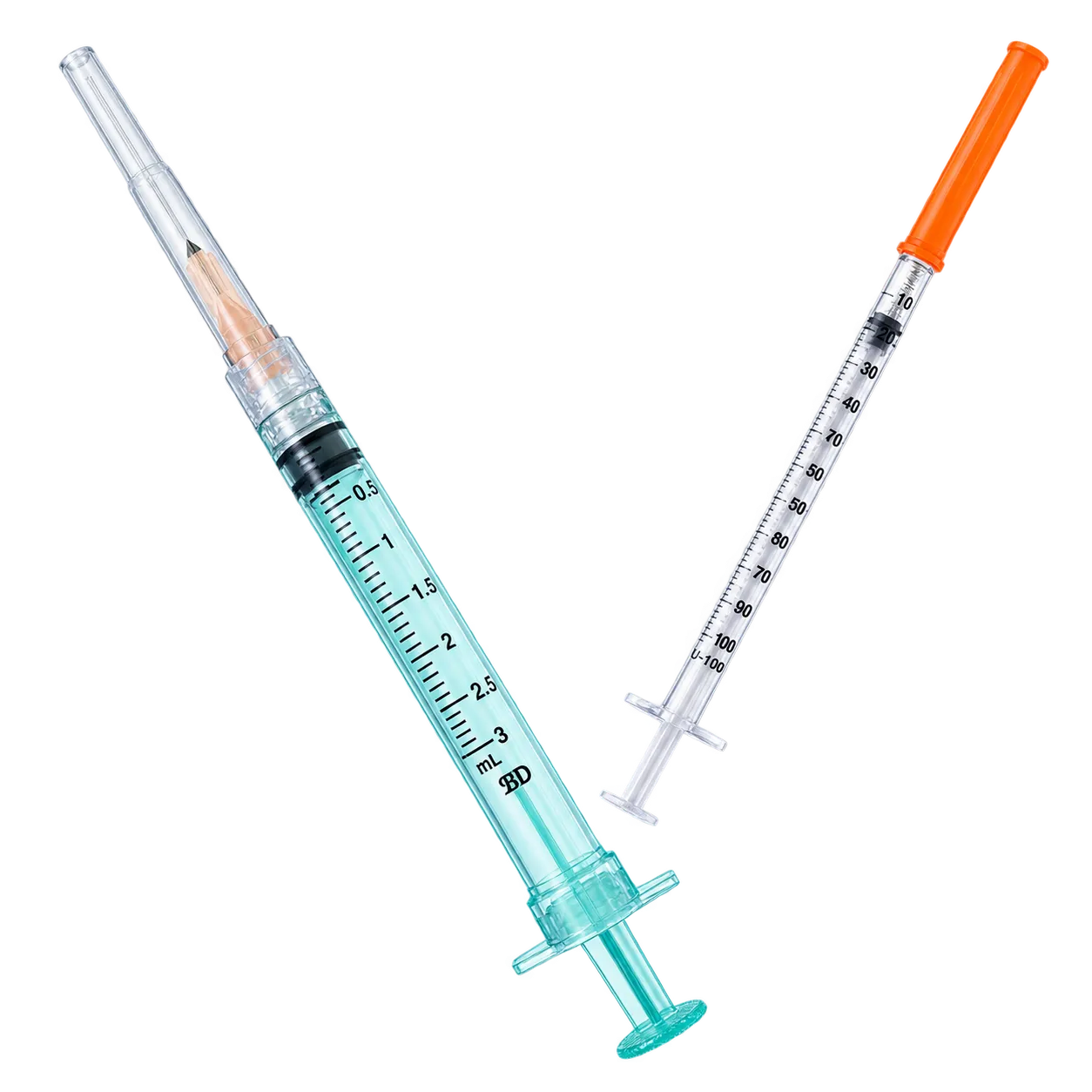

Two things can go wrong with a syringe after the injection is finished. Someone can get stuck by the needle, and the syringe can be reused on someone else. Both are avoidable by design rather than by procedure, which is the argument for a safety syringe over a conventional one plus a disposal protocol.
Needlestick injury happens in the seconds between withdrawing the needle and disposing of it. That interval is when the sharp is exposed, contaminated, and being handled by someone whose attention has moved on to the patient or the next task. Recapping is the classic moment of injury, which is why it is discouraged, but a needle that cannot be recapped still has to travel to a sharps bin. Drawing it into the barrel removes the exposure at the source, and doing so with the plunger means no extra action to remember.
Reuse is a different problem with a different geography. Where sharps supply is constrained, a syringe that still works may be used again, and bloodborne infection follows. A plunger that snaps off after retraction makes the barrel useless, which is why reuse-prevention designs are specified for large immunisation campaigns rather than left to policy. The remaining considerations are ordinary. Graduation has to be fine enough for the dose, which is why the small volumes here are marked at hundredths of a millilitre, and the barrel has to be clear enough to read against.
Needle gauge then follows the volume and the route, since a fine needle that suits a vaccine will not pass ten millilitres in a reasonable time. Medigear.uk supplies the instructions for use with every order.