
Peripheral arteries occlude over long segments, and crossing those segments is the hard part of treating them. A guidewire pushed at the groin has to transmit that force down a metre or more of vessel to a plaque that resists it. Long before the tip moves, the wire bows sideways against the vessel wall and the force is lost.
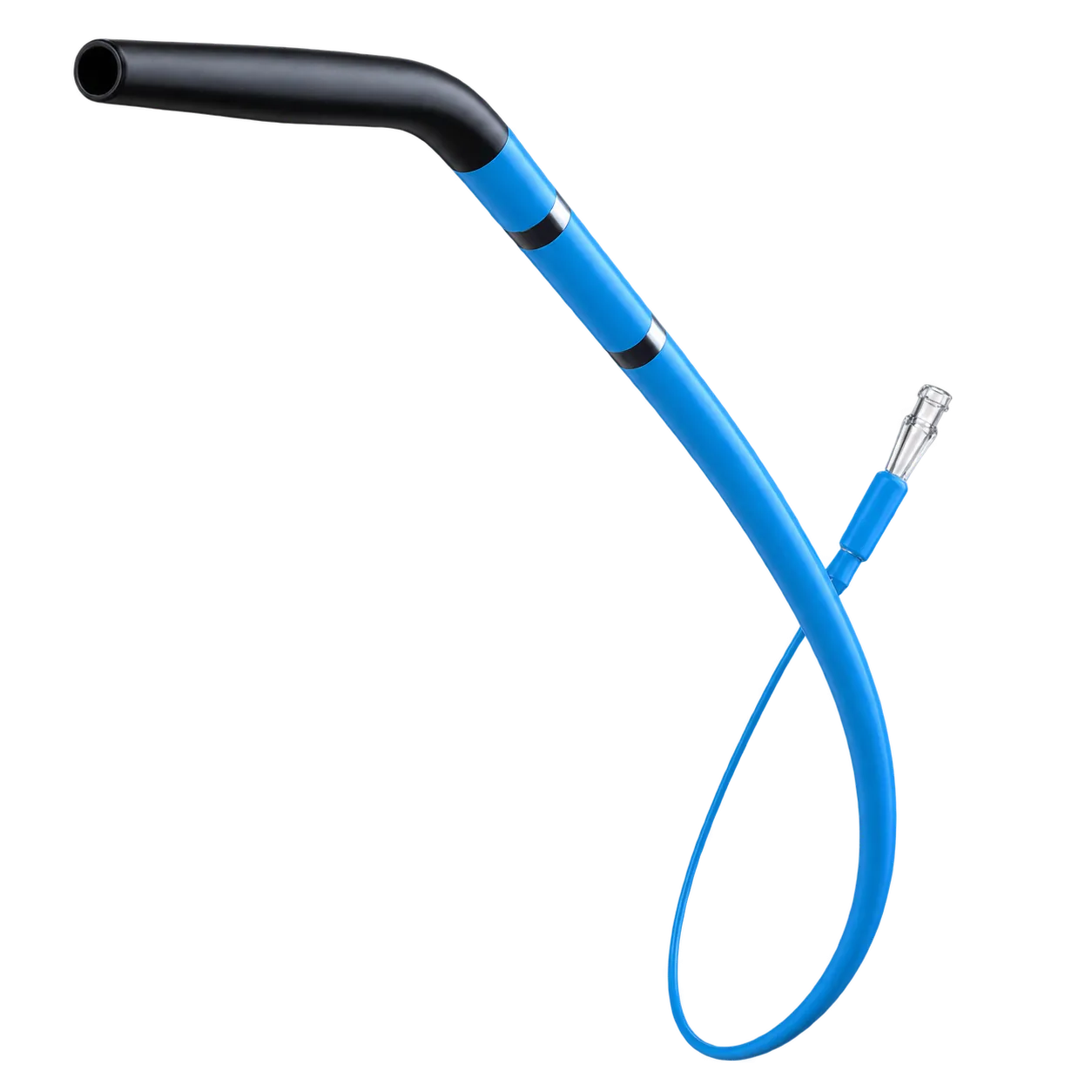
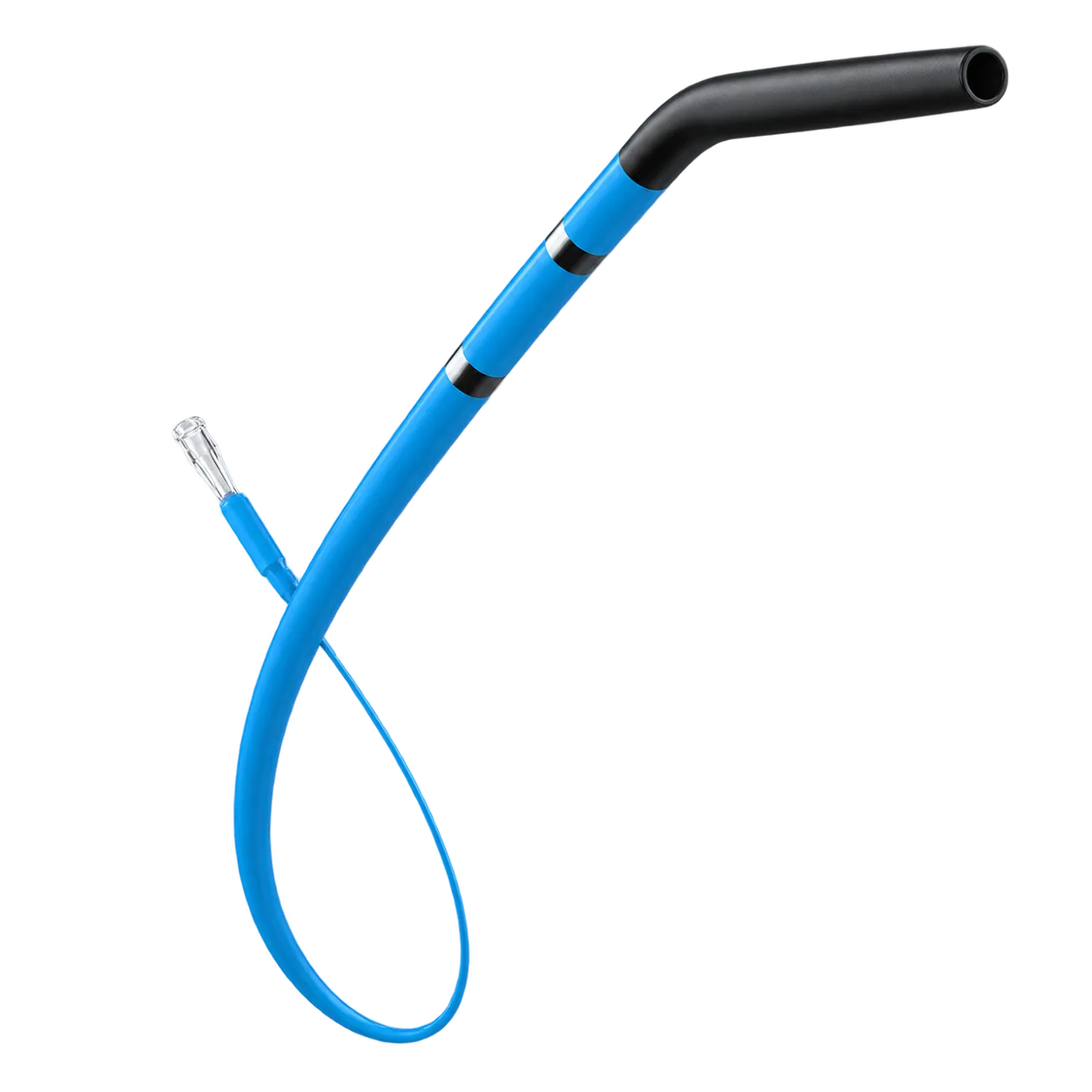
A support catheter fixes that geometrically. Advanced over the wire to just behind the tip, it prevents the wire from bowing along everything it covers, so the unsupported length becomes centimetres rather than tens of centimetres. Push applied at the hand then arrives at the tip. The same principle explains why a braided shaft matters, because the catheter itself must resist buckling if it is to prevent the wire from buckling.
Telescoping extends the idea further. Running a smaller catheter inside a larger one lets support be built up in steps, and it is a recognised approach for occlusions that resist a single-profile attempt. Several established platforms are built around it. Beyond crossing, these catheters do routine work that has nothing to do with force. They hold position during wire exchanges, so a wire that has crossed a lesion can be swapped for one better suited to what follows. They allow contrast to be injected close to the target rather than from the guide. Angled tips let branches be selected without exchanging to a shaped catheter.
Catheter choice generally follows whichever wire is already in use. Medigear.uk supplies the instructions for use with every INT Medical Support Catheter order.